Moving to Alaska by Road vs Shipping by Sea: What Homeowners Should Know
Planning a long-distance relocation to Alaska? You may already be looking at a road route through Canada, or wondering whether shipping by sea could be a better option. The reality is that the best route depends on more than personal preference.
When homeowners compare moving to Alaska by road vs shipping by sea, the real question is not only which option sounds easier, but which route makes sense for their destination, inventory, timing, and final delivery needs.
When a Road Move to Alaska Makes Sense
For many homeowners, moving to Alaska by road is the most direct transportation option. Instead of moving through a port, the shipment travels by truck through Canada and continues to its destination in Alaska.
The standard overland route follows this path:
Home → Truck Pickup → Canada Transit → New Home in Alaska
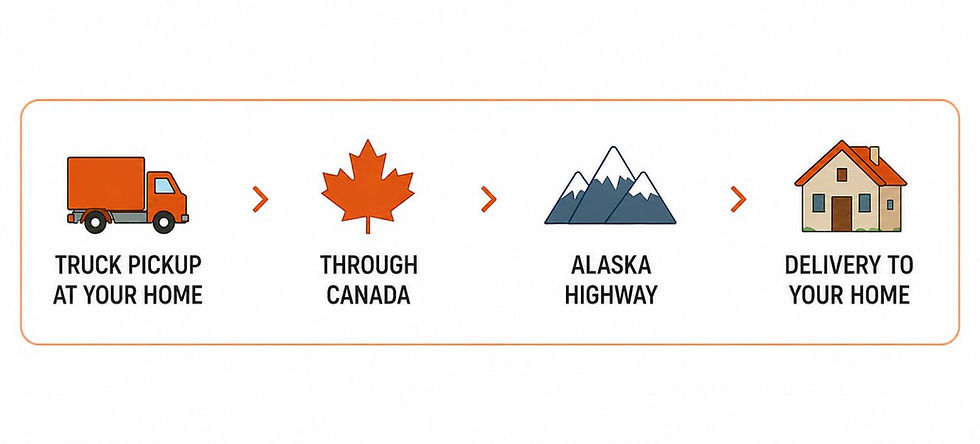
When road transportation is the best fit:
The destination is connected to Alaska's highway system, including Anchorage, Fairbanks, Palmer, Wasilla, and Tok
Direct truck delivery is available (Home → Truck → New Home)
The move involves a small to mid-sized household inventory, including furniture, antiques, artwork, electronics, or other items that require minimal handling to reduce the risk of damage
Vehicle transportation is included (best suited for standard sedans, compact SUVs, and light-duty trucks that meet highway transport requirements)
You need seamless and predictable transit times (typically 7–14+ days, depending on route and conditions)
Key considerations for Alaska road moves:
Delivery timelines may be affected by road conditions and seasonal weather
Not all Alaska destinations are accessible by highway
Properties with restricted access (narrow streets or steep driveways) will require a smaller shuttle truck for final delivery
Note → Canada Border (CBSA) Compliance: Overland moves must clear the Canada Border Services Agency (CBSA), and you must provide an accurate detailed inventory list. High-risk items—specifically firearms, live plants, alcohol, and food—are strictly regulated or prohibited. Always check official CBSA guidelines beforehand to avoid border delays.
However, road transportation is not always the most practical solution. For coastal communities, island destinations, and locations outside Alaska's highway network, sea shipping may offer a more suitable route.
When Sea Shipping to Alaska Makes Sense
For some homeowners, shipping household goods to Alaska by sea is the most practical way to reach their destination. This transportation method uses ports and vessel service to move shipments to Alaska.
The standard maritime route follows this path:
Origin Home → Truck Pickup → Port Terminal (Seattle/Tacoma) → Vessel → Alaska Port → Final Delivery
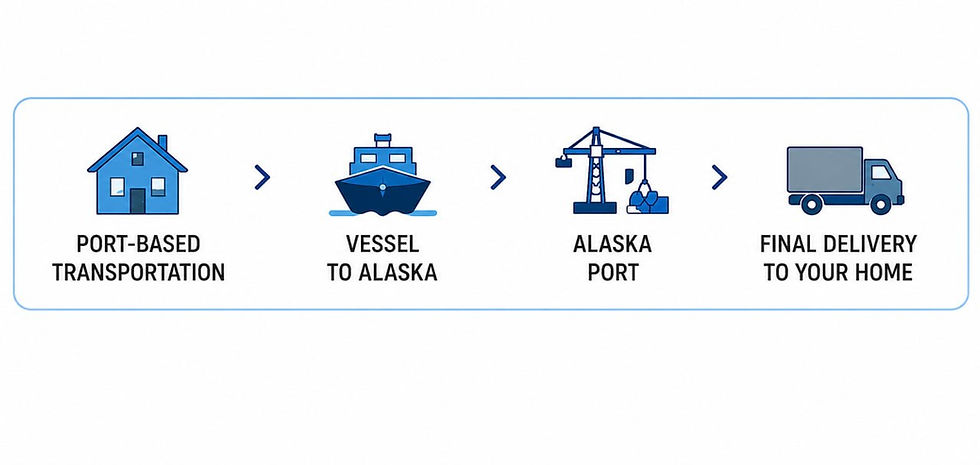
When sea shipping is the best fit:
The destination is located in Juneau, Sitka, Ketchikan, Kodiak, or another community without direct highway access
The move involves a large household inventory, multiple rooms of furniture, vehicles, oversized items, or equipment that requires the security and capacity of dedicated container shipping
Vehicle transportation is included (often used for oversized or non-road-compliant vehicles such as large pickup trucks, lifted SUVs, boats, or ATVs) Key considerations for Alaska sea shipping:
Delivery timelines depend on vessel schedules and port operations (often 2–6+ weeks, depending on route and sailing availability)
Port handling adds additional transportation stages
Final delivery is usually required after arrival at an Alaska port
Note → Maritime Safety & Hazmat Restrictions: Movers handle logistics, but hazardous materials are not allowed in household containers. Items such as flammable liquids, aerosols, ammunition, and large lithium-ion batteries are restricted or prohibited. Always check carrier guidelines in advance to avoid shipment rejection.
While both road and sea transportation can be effective, the best option depends on the destination, inventory, and overall moving plan.
Moving to Alaska by Road vs Shipping by Sea: How the Two Options Compare
While both transportation methods can be effective, they serve different moving needs and destinations across Alaska.
Quick Route Comparison Table
Factor | Road Move | Sea Shipping |
Best For | Road-accessible destinations | Coastal, island, and remote Alaska communities |
Common Destinations | Anchorage, Fairbanks, Palmer, Wasilla, Tok | Juneau, Sitka, Ketchikan, Kodiak, Aleutian communities |
Delivery Window | Based on route distance, road conditions, and weather | Based on vessel schedules and port operations |
Cost Factors | Route distance, shipment size, accessibility, and delivery requirements | Shipment size, destination, port handling, and logistics |
Inventory Considerations | Small to medium shipments (fragile items, electronics) | Large or heavy shipments (bulky furniture, vehicles) |
Final Delivery Coordination | Required when direct truck access is unavailable | Required after arrival at an Alaska port |
Both road and sea routes can be effective ways to move household goods to Alaska, but they differ in logistics, delivery timelines, and transportation requirements. Learn how these factors affect [Alaska moving costs and transit times] when choosing the best route for your move.
Understanding Final Delivery in Alaska
Final delivery is the transportation of your shipment from an Alaska arrival hub directly to your new doorstep.
For Road Moves → Conditional
The primary moving truck typically provides direct door-to-door delivery. A shuttle service (transfer to a smaller local truck) may only be required when:
Narrow roads restrict truck access
Steep driveways prevent safe maneuvering
Low-clearance bridges or other obstacles limit entry
For Sea Shipping → Always Required
Cargo vessels transport containers only to Alaska port terminals. A local truck is always required to complete the final leg from the port to your residence.
Larger household inventories typically require full-size commercial trucks
Limited property access—such as narrow roads, steep driveways, or low-clearance obstacles—may require a shuttle service (a smaller local truck) to complete the final delivery safely.
Always confirm that final delivery and last-mile coordination are explicitly included in your moving estimate to ensure transparent, predictable pricing.
Plan Your Route: Get a Reliable Alaska Moving Estimate
The best Alaska moving route depends on more than distance alone. Your pickup location, destination, inventory, timing, and delivery requirements all influence how your relocation should be planned.
Road or Sea? We’ll Build the Perfect Route
Let our logistics experts analyze your destination and inventory. We guarantee a precise moving plan and transparent pricing with zero broker handoffs.


