Moving to Hawaii With a Dog or Cat: 5 Hidden Airport Traps and How to Avoid Them
Updated: Feb 28
At EZ MoveIt, we handle the heavy lifting of out-of-state moves to Hawaii every day. But we know that when it comes to moving to Hawaii with a dog or cat, our clients' biggest stress isn't shipping the sofa—it's making sure their pet flies safely.
You can have the perfect paperwork and still get stuck at the airport because of the wrong crate, a missed pet reservation, or a late arrival time. In this article, we break down the most common flight-day failures so your move goes smoothly and your pet’s arrival perfectly matches your furniture delivery schedule.

Stage 1: Departure Airport — The Check-in Desk
This is where the airline decides if your pet is cleared to fly. Here are 3 common reasons for boarding denials.
Trap 1: The Crate Fails Visual Inspection
Airlines can deny boarding if your crate doesn’t meet specific safety standards.
If flying in cargo (usually dogs): You must use a hard plastic crate. The top and bottom must be secured with metal bolts, not plastic clips. Your pet must be able to stand up straight and turn around easily. If their ears touch the ceiling, you may be denied boarding.
If flying in the cabin (cats and small dogs): The carrier must be soft-sided, fit completely under the seat, and have a waterproof bottom. Your pet must still be able to stand and turn around inside.
Tip: Don’t assume it’s "good enough." Check all fasteners in advance. If you are unsure about the height, buy one size larger.

Trap 2: No More "Pet Spots" on the Flight
Many travelers think they can buy their own ticket first and add a pet later. This is a huge mistake. Airlines have a strict limit on the number of animals allowed on each flight. On popular Hawaii routes, these spots sell out months in advance.
Tip: Book your pet’s spot the exact same day you buy your ticket. Immediately after booking, call the airline to confirm the reservation specifically for your animal.
Trap 3: Tarmac Temperature Restrictions
This applies to pets traveling in cargo. During loading, crates often sit on the open tarmac. Per federal regulations, the outdoor temperature must be between 45°F (7°C) and 85°F (29°C). If extreme heat or cold is forecasted, the airline may cancel your pet’s reservation for their safety.
Tip: In the summer, try to book morning or late-night flights when temperatures are below the 85°F threshold.

Stage 2: The Layover — Connecting Flights
A direct flight is always the best-case scenario. But if you have a layover and your pet is in the cargo hold, watch out for this trap.
(Note: If your pet is flying in the cabin with you, they simply stay by your side as you walk to your next gate).
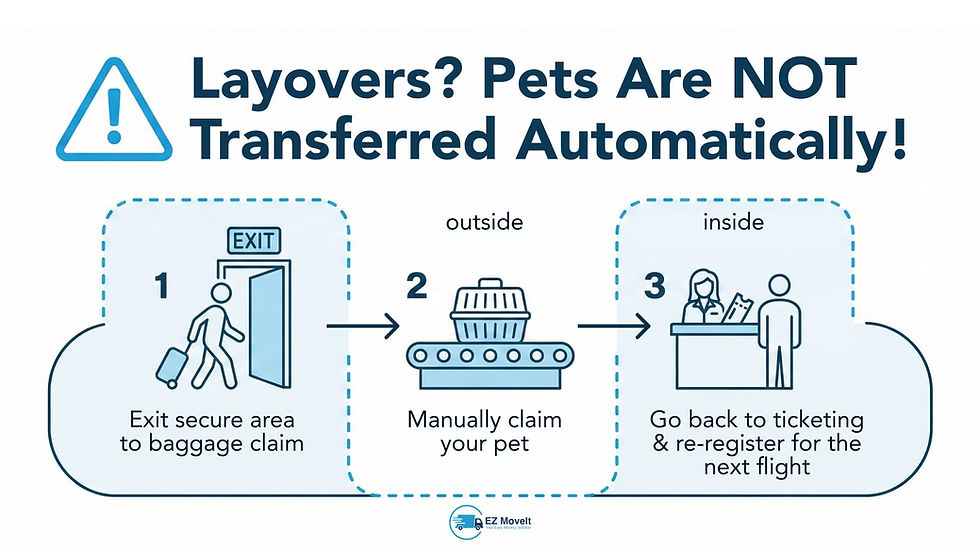
Trap 4: Manual Re-checking of Your Pet
Many airlines (such as Alaska Airlines or Hawaiian Airlines) will not transfer animals to other carriers during a connection. Therefore, you will have to leave the secure area, pick up your pet at baggage claim, and go through the entire check-in process again for your next flight. This process takes 3 to 4 hours.
Tip: If a layover is unavoidable, choose a ticket with the longest possible connection window (4 hours or more).
Stage 3: Arrival in Hawaii — The Quarantine Center
Upon arrival, every animal must be inspected at the Airport Animal Quarantine Holding Facility. Even if your pet’s paperwork is perfect, you may not be able to take them home the same day if you arrive too late.
Trap 5: Late Arrival and Facility Closing
The inspection station is open from 8:00 AM to 5:00 PM, but your pet must be inside the building no later than 4:30 PM.
State officials strongly recommend landing no later than 3:30 PM.
After landing, it takes airline staff about an hour to physically transport the crate from the plane to the inspection building. If your pet does not arrive by 4:30 PM, they will stay at the facility overnight.
You must pick them up by 10:00 AM the next morning, or you will be charged an extra $59 fee.
Tip: Focus on booking flights with a morning arrival. The earlier you land, the better your chances of taking your pet home the same day, even if your flight is delayed.

Step-by-Step Checklist for Moving to Hawaii With a Dog or Cat
Moving to Hawaii is a juggling act between your lease ending, furniture delivery windows, and the rules of agricultural inspection: what goes to the movers vs. on the plane. To make sure your pet's travel fits perfectly into this schedule, just follow this countdown:
4 to 6 Months Out (The Vet Phase) |
|
3 to 2 Months Out (Booking Phase) |
|
1 Month Out (Calm Prep) |
|
2 Weeks Out (Final Checks) |
|
10 Days Out (The Airline Certificate) |
|
48 Hours Out (Document Time) |
|
Plan B: Emergency Decision Tree
Keep this logic handy just in case things go wrong at the airport:
Crate rejected at the counter because of size? Immediately buy a larger crate right there at the airport (yes, it will be expensive, but it can save your move) or ask to be rebooked on the next flight.
Flight blocked by a temperature embargo? Rebook for an early morning or late night flight when the weather along your route drops below 85°F.
Flight delayed causing a nighttime arrival? Pack an overnight bag with your essentials. Check into a hotel and be at the quarantine station doors by 10:00 AM the next day.
FAQ (Frequently Asked Questions)
Are there flight restrictions for snub-nosed (brachycephalic) breeds?
Yes. Most US airlines completely ban snub-nosed breeds (like Pugs, French Bulldogs, and Persian cats) from flying in the cargo hold due to severe breathing risks at high altitudes. If your pet is too large to fit in a cabin carrier, you will likely need to hire a specialized pet transport service.
Can pets fly directly to other islands (Maui, Kauai, Big Island)?
Yes, but it requires a Neighbor Island Inspection Permit (NIIP) in advance. Honolulu (HNL) is the only official entry port where the state facility is located. To fly directly to LIH, OGG, or KOA, you must have a confirmed appointment with an approved private vet clinic. You must print this permit and hand it to the agent before your flight, or you may be denied boarding.
Should I give my pet a sedative before the flight?
No. The AVMA and major airlines strongly advise against sedating pets for air travel. If an airline agent notices your pet is heavily sedated or unresponsive at check-in, they can legally deny boarding for safety reasons.
What are the airline rules for food and water during the flight?
You must attach food and water bowls to the inside of the crate so staff can feed your pet without opening the door. Federal regulations require you to offer food and water within 4 hours before check-in. You will be required to sign a certification at the counter verifying this.
How much are the official inspection fees?
In Honolulu (Direct Airport Release): $185 per pet. Your documents and payment (cashier’s check or money order only) must arrive at the HDOA at least 10 days before your flight, or the fee increases to $244.
Neighbor Islands (NIIP): The state permit fee is $165. Plus, you will pay a separate fee directly to the private clinic for inspecting your pet at the airport when you land.
Your Hawaii Move, Simplified.
You handle the paws. We handle the boxes. Experience seamless out-of-state moving with EZ MoveIt.