What to Ship to Hawaii vs. What to Sell Before Moving
Why Choosing What to Pack Matters More Than You Think
A [Hawaii long distance moving] rarely comes cheap. Many people focus purely on finding the lowest shipping rates, but the real money drain starts before the container is even loaded. Families often sell their favorite furniture, only to overpay for replacements on the island. Others do the exact opposite: they pay to ship items that quickly ruin in the local climate or cost practically nothing at a local store.
Island life comes with its own rules—high humidity, salty air, and limited shopping options will quickly destroy the wrong materials. That’s why asking "what should I bring to Hawaii?" is just as important as asking "how much does the move cost?"
This guide will help you figure out what's actually worth shipping, what’s better to sell, donate, or leave in storage, and how to avoid expensive mistakes. We’ve gathered real-world experience from people who have already made the move to Hawaii and organized it to give you peace of mind.
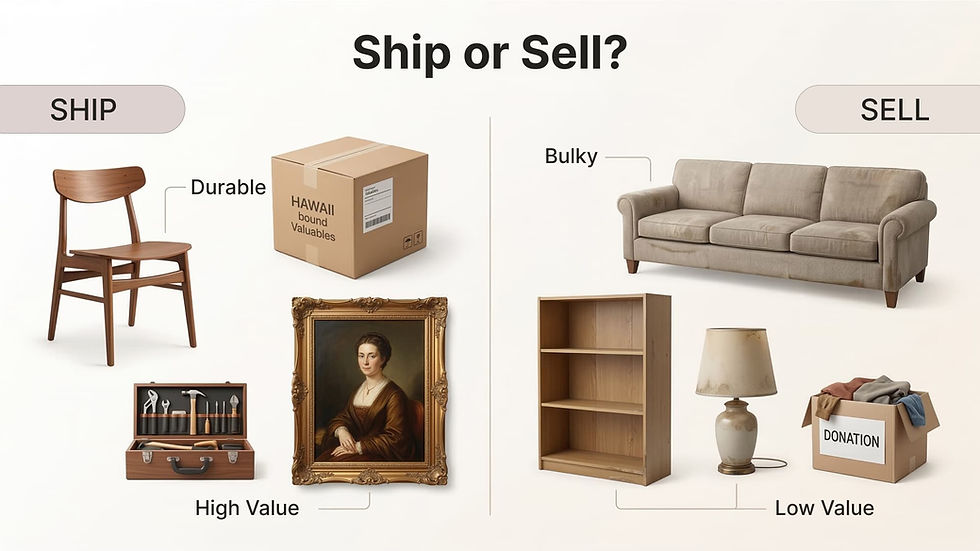
What You’ll Find in This Guide:
Categories of items you should usually ship to Hawaii.
Things that are better to sell or buy locally.
A system for evaluating every item based on cost, quality, climate, and emotional value.
Common mistakes and how to avoid them.
Our simple "Ship / Sell / Store / Replace" framework.
Ready? Let’s dive in!
How to Decide if an Item is Worth Shipping
Before making your packing lists, you need to look at every item rationally. Ask yourself these five questions:

Replacement cost: Is it expensive or hard to replace on the islands? High-quality furniture and tools are often pricier or just unavailable.
Shipping cost: Do the size and fragility justify the shipping fee? Shipping a massive glass display case can cost hundreds of dollars.
Quality: Is it a cheap mass-market piece or a durable item? Cheap particle board cabinets and worn-out couches rarely deserve space in your container.
Climate impact: How will the Hawaiian climate affect its lifespan? High humidity and salty air quickly ruin leather, MDF, and untreated metal.
Sentimental value: Does it hold long-term or personal value? Family heirlooms, your favorite tools, or rare sports gear are worth bringing, even if shipping is a bit tougher.
This system helps you make decisions based on cost, quality, and reality, rather than just emotions.
What You Should Usually Ship to Hawaii
Solid Wood Furniture & Durable Items
Why: Solid wood, rattan, and stainless steel hold up much better in the tropics. Humidity and salt don't damage them as easily as cheap manufactured wood or certain fabrics. Plus, the selection of good furniture on the islands is limited, and prices are higher. People on Reddit often mention that buying a solid dining table or a good bed locally was way more expensive and harder to find than on the mainland.
When it makes sense: If the furniture is well-made, in great condition, and fits your new place. Pack it tightly and toss in some moisture absorbers (silica gel).

Tools, Equipment, and Professional Gear
Why: Specialized tools, musical instruments, and expensive sports gear can be tough to find (or really pricey) on the islands. Lots of people regret selling their toolsets before the move because replacing them locally cost a fortune and the new ones weren't as comfortable to use.
Advice: If you're a contractor, musician, gardener, or serious hobbyist, bring your trusted gear. The main exception: e-bikes and items with lithium-ion batteries. Shippers often won't take them due to safety regulations.
Family Heirlooms & Sentimental Items
Why: Emotional value easily beats logistical costs. You can’t just buy a replacement for an antique clock or a family painting. One user mentioned shipping a family bed frame simply because of its rich history.
Advice: Pack these items with extra care. Use waterproof packing materials and definitely get moving insurance.
High-Quality Kitchenware & Daily Essentials
Why: A solid set of pots, good knives, or a high-end food processor will likely cost more in Hawaii. Forums are full of warnings that premium cookware and appliances are pricier and harder to track down.
Advice: Separate your reliable "workhorses" (like that favorite cast-iron skillet or chef's knife) from the weird gadgets you barely use. If an appliance is cheap and gathers dust, just buy a new one later.
Hobby & Sports Equipment
Why: For serious athletes and outdoor fans, tested bikes, surfboards, or scuba gear are essential. Some even recommend bringing new scuba tanks if they are high-end and certified.
Advice: Weigh the cost against the condition of the gear. If it’s something you can easily rent or buy used on the island, you might not need to bring it.
What’s Usually Better to Sell Before Moving
Cheap MDF Furniture & Old Couches
Particle board (MDF) warps and swells from the humidity, and old upholstered furniture absorbs smells and can easily grow mold. Save that precious container space—sell off those cheap shelves before you leave.
Duplicates & Low-Value Items
Backup coffee makers, extra dish sets, and cheap electronics with no moisture protection will quickly go bad. You can easily buy new items adapted to the local climate at places like Costco or Walmart once you arrive.
Old Appliances
Shipping a used, standard refrigerator rarely makes financial sense unless it’s a premium, high-end model that's hard to get on the island.
The "Ship / Sell / Store / Replace" Framework

To make sorting easier, go through each room and sort your belongings into four distinct buckets:
Category | What Goes In It |
Ship | High-value, durable, sentimental items; tools, sports gear, premium furniture. |
Sell | Cheap, bulky, or worn-out items; old couches, outdated electronics. |
Store | Stuff that's hard to part with but useless on the island (leave in a storage unit on the mainland). |
Replace | Low-cost items easily bought on the islands: basic dishes, mattresses, simple appliances. |
Need a second opinion? If you’re not sure which category an item belongs in, send us your preliminary list. The experts at Ez MoveIt will review it for free and tell you what’s actually worth the shipping cost.
Why a Professional Evaluation Saves You Money: Real Experience
Even with a solid decision-making system, choosing what to pack is tough. You have to factor in port fees, climate risks, and the specific prices on your destination island. Specializing in [Hawaii long distance moving] services and other complex routes, we at Ez MoveIt constantly see how the right planning saves clients thousands of dollars.

A case from our practice:
Last month, we handled a move for a family relocating from California to Maui. Originally, they planned to bring a massive set of pressed-wood furniture and older home appliances, which would have required a 40-foot shipping container. After our consultation, they decided to sell that bulky load back on the mainland. In the end, all their truly valuable and necessary items fit perfectly into a 20-foot container. The money they saved on shipping more than covered the cost of buying beautiful, moisture-resistant teak furniture once they got to the island.
The smartest move to Hawaii isn’t necessarily the biggest one—it’s the best-planned one.
Ready for Your Move?
Moving to Hawaii is a chance to start a fresh chapter in a tropical paradise. Making the wrong choices about what to pack can become your biggest moving expense, but now you have a system to avoid that. Use our framework, keep the island lifestyle in mind, and don't be afraid to let go of the clutter.
We’ll take care of making sure your favorite belongings make it to your new home safe and sound.
Request your Hawaii Move Quote today
and get a detailed plan for optimal shipping, exact pricing, and timelines from the experts at Ez MoveIt.


