Washington Long-Distance Movers vs Brokers: Why the Lowest Quote Can Be a Red Flag
If you’re comparing Washington long-distance movers, the lowest quote may look attractive at first — but the real question is who will actually handle your move.
Let’s be honest: moving out of state is exhausting. You are packing up your entire life into boxes while trying to juggle lease dates, work, flights, and a dozen last-minute details. In the middle of that chaos, a cheap moving quote can feel like a relief. You just want to say “yes,” lock in a date, and stop worrying.
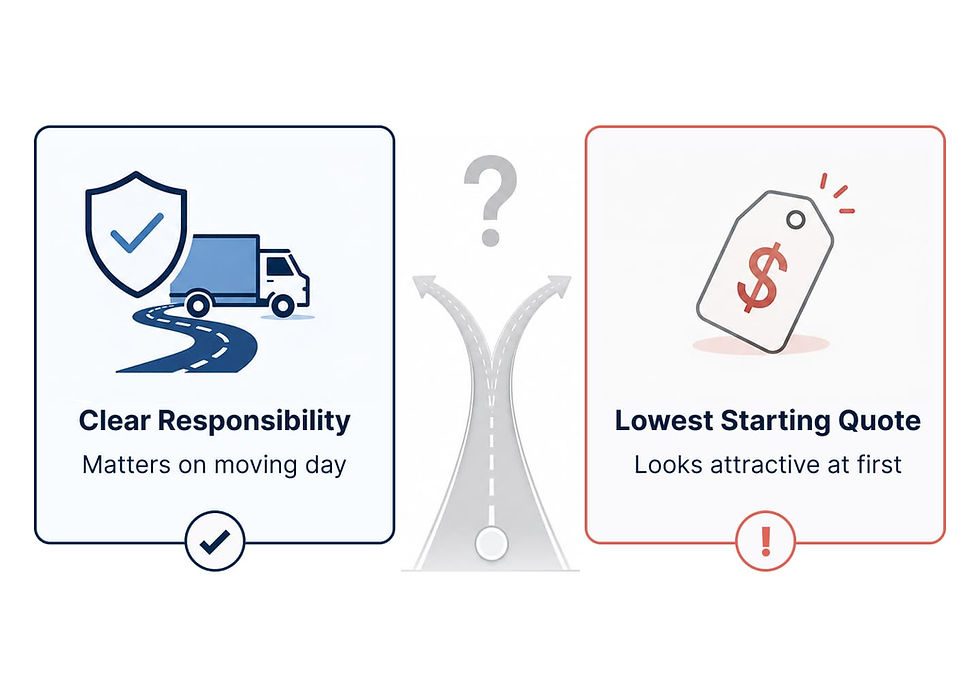
But once the excitement of saving money fades, the real risk becomes clear. Before signing a contract, you need to ask one simple question: who is actually responsible for your belongings if something goes wrong on moving day?
In the moving industry, there are two very different types of companies: direct carriers and moving brokers. One physically handles your move from pickup to delivery. The other may only sell your move and pass it to another company. Not knowing the difference is one of the biggest reasons people run into price changes, delays, poor communication, and moving day surprises.
Who is Who: Direct Carrier vs. Moving Broker
You might think you are calling a moving company, but you could just be talking to a call center. The federal government (FMCSA) draws a very strict line between companies that simply sell moving services and the companies that actually perform them.
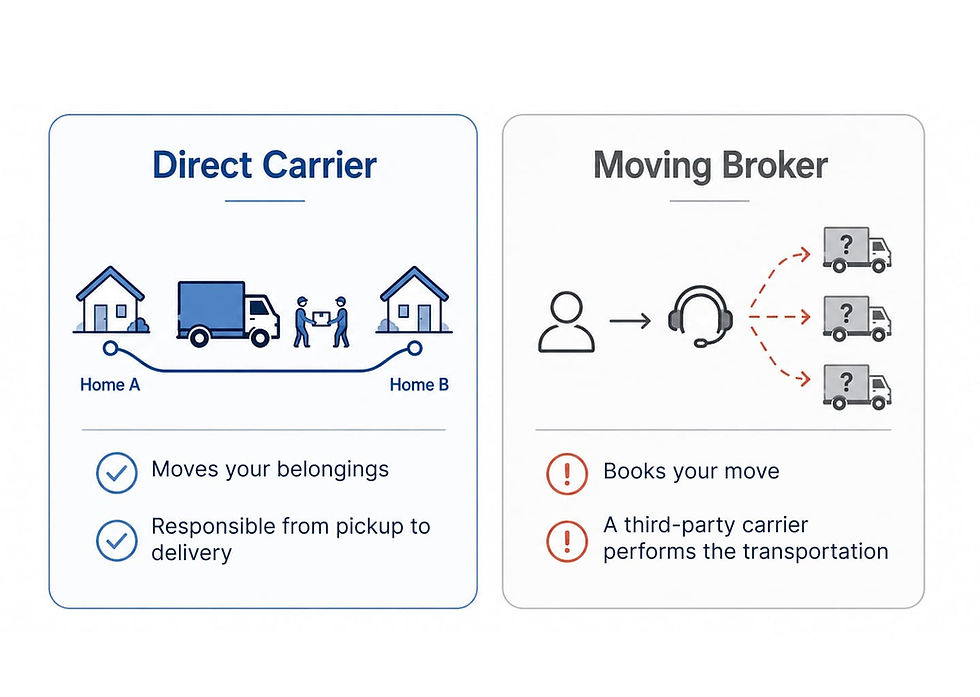
Feature | Direct Carrier (Motor Carrier) | Moving Broker |
What they do | They physically load, transport, and unload your items. | They search a database for someone willing to take your job. |
Who shows up | The carrier's own professional crew. | An unknown subcontractor hired by the broker. |
Accountability | The carrier is fully responsible from door to door. | The broker washes their hands of responsibility once the job is transferred. |
Price Guarantee | A transparent estimate based on actual volume. | The actual driver might refuse to move your items for the broker's lowball price. |
The harsh reality: A broker might promise you the moon and offer an incredibly low price just to secure your deposit. But on moving day, nobody might show up at all if the broker fails to find a driver willing to take the job.
The Lowball Phone Quote Trap
Over the phone, a sales rep can give you any number you want to hear. But beautiful promises do not protect you.

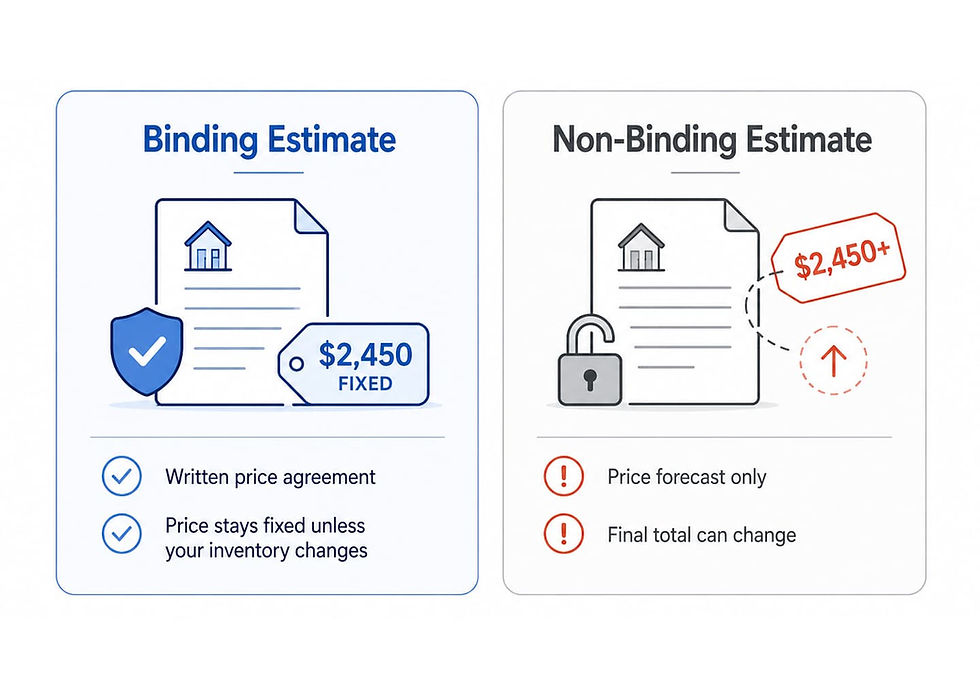
Federal regulations protect consumers, but you need to understand exactly what kind of document you are looking at:
Binding Estimate: This is your armor. It is a written agreement guaranteeing that you will not pay a cent more than the agreed-upon amount (unless you add more items on moving day).
Non-Binding Estimate: This is just a forecast. The final total can always change. The cheapest broker quotes are almost always non-binding. As a result, once your belongings are loaded onto the truck, the actual cost of your move can multiply due to hidden fees.
The Massive Deposit Trap
This is one of the brightest red flags of a broker. Middlemen often demand a massive, non-refundable deposit upfront—sometimes 30% to 50% of the total move cost. The customer assumes they are prepaying for the move, but in reality, this is simply the broker’s commission for finding a truck. If a driver isn't found on moving day, getting that money back is nearly impossible.
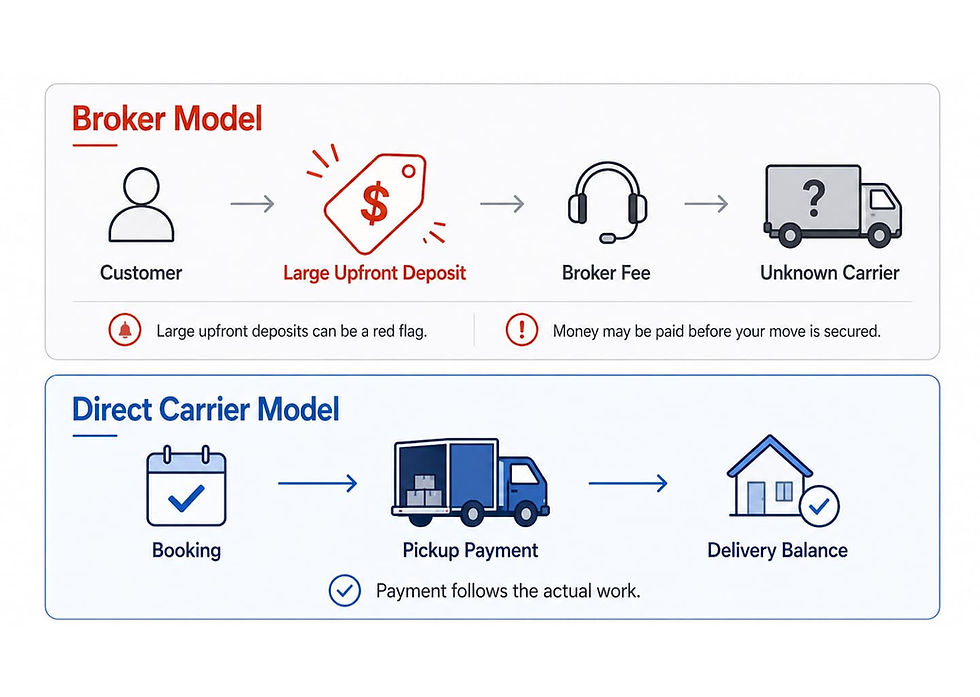
A direct carrier operates differently. At EZ MoveIt, we understand how expensive moving can be, which is why we charge $0 down to book your date. You pay for the actual work: a portion is paid at pickup, and the remaining balance is only paid after your belongings are safely delivered. A transparent payment system with no hidden "broker fees" makes your move out of Washington predictable and safe.
What Happens When Life Changes?
When people worry about a move, they usually picture broken TVs or scratched dressers. But the most stressful and expensive problems are usually logistical.
Think about how often plans change at the last minute. Before trusting someone with your life in boxes, ask yourself:
Who solves the problem if a massive semi-truck can’t fit down the narrow street of your new home?
Who helps with storage if your new apartment keys are delayed by a week?
Who are you calling in a panic if your dates need to shift?
When you hire a direct carrier, you communicate with one single company that knows everything about your shipment. If you hire a broker, be prepared for the sales manager to stop answering the phone, while the third-party driver simply says, "I don't make the decisions, call your broker."

How to Spot a Broker: 3 Crucial Questions
Brokers rarely admit upfront that they are just middlemen. They will say "we will move you," meaning "we will find someone to move you." To know exactly who you are trusting with your belongings, ask the sales rep these three questions before paying a dime:
The Direct Question: Ask point-blank: "Are you the company that will physically move my items, or are you going to transfer my job to another company?"
The Final Contract Check: Don't wait until moving day when you have no way out. During the estimate phase, ask: “Whose legal company name will be on the final transportation contract (Bill of Lading)?” With a direct carrier, the name on your initial estimate and the final paperwork will always match perfectly. If they give you a vague answer or mention their "trusted partners," you are dealing with a broker.
The Fine Print Test: Brokers love vague estimates so they can inflate the price later. A true, honest estimate from a direct carrier looks like a detailed plan of action. It clearly outlines conditions for stairs, elevator usage, temporary storage options, and exact payment methods with zero hidden fees.
The Bottom Line for Washington Long-Distance Movers: Why "Cheap" Costs Too Much
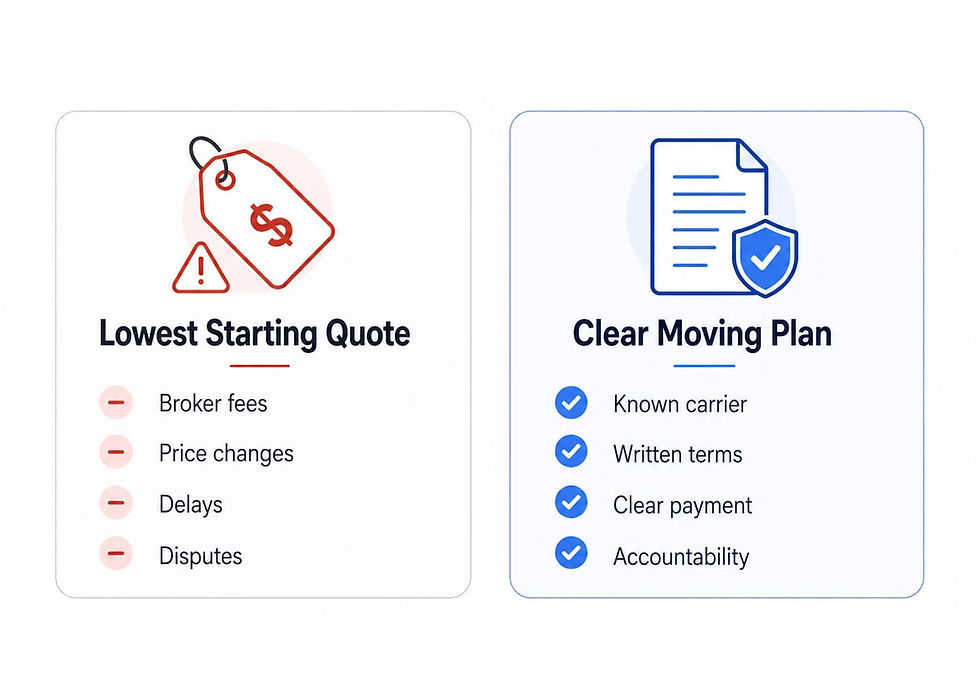
We completely understand the desire to save money. But the paradox of the moving industry is that chasing the lowest starting quote almost always results in paying significantly more.
Hidden broker fees, sudden markups at the back of the truck on moving day, and endless disputes over damaged items consume not only your "saved" money but also your peace of mind.
Reliability is a standard, not a luxury.
Experience a seamless move with EZ MoveIt—no broker markups, no hidden schemes:
✓ Fixed Pricing
✓ $0 Deposit for Booking
✓ One Dedicated Team from Door to Door