Direct Carrier vs Moving Broker for an Alaska Move: Which Should You Choose?
When planning a move to or from Alaska, price is not the only factor to consider. You also need to know who will be responsible for your shipment, whose name will appear on the moving documents, and who you will contact if something goes wrong.
Direct Carrier vs Moving Broker for an Alaska Move: Which Is the Better Choice?
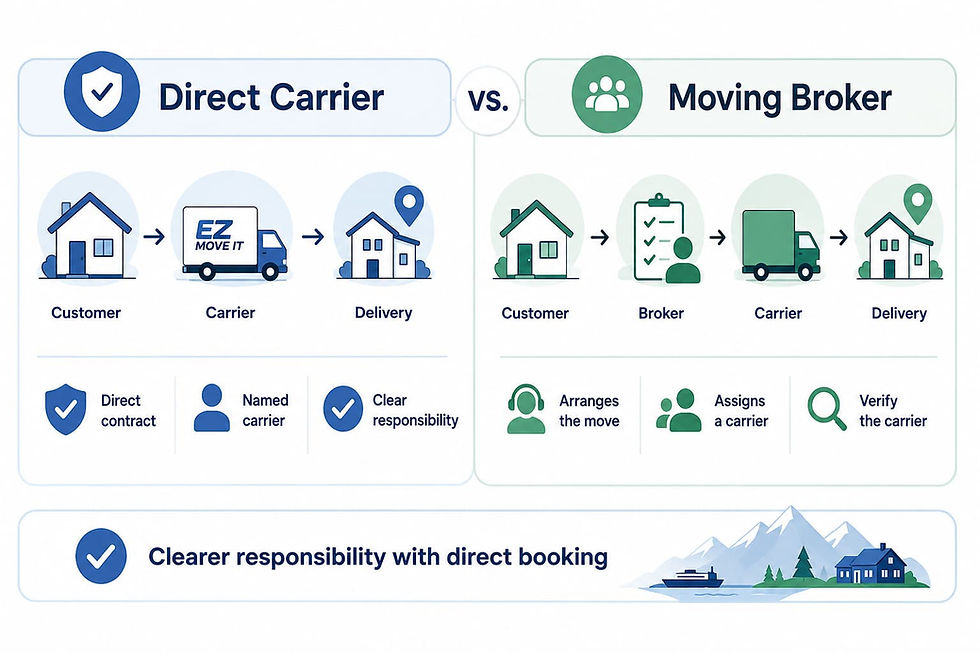
For most Alaska moves, booking directly with a registered moving carrier is the clearer and more predictable option.
When comparing a direct carrier vs moving broker for an Alaska move, the main difference is who accepts responsibility for transporting your belongings.
A direct carrier is the company you hire to manage the move under your transportation contract. A broker does not usually transport the shipment. Instead, it arranges for another moving company to complete the job.
A broker may still be a reasonable option, but only if it identifies the actual carrier before pickup and clearly explains who is responsible for the estimate, delivery, and claims.
What Is the Difference Between a Direct Carrier and a Broker?
Direct Moving Carrier
A direct carrier is a moving company that the customer hires directly.
The carrier:
accepts responsibility for the shipment under the moving contract;
appears on the transportation documents;
organizes pickup, transportation, and delivery;
handles claims involving lost or damaged belongings.
For certain parts of an Alaska route, the carrier may work with ocean carriers, port operators, or local delivery partners. This is a normal part of Alaska moving logistics.
The advantage of direct booking is not that one truck and one crew complete every stage. The advantage is that you know which company is responsible to you under the contract.
Moving Broker
A moving broker usually does not transport your belongings. It collects information about the move and looks for a carrier that can complete it.
A broker may:
prepare a preliminary price;
compare available carriers;
assign the move to an outside company;
coordinate communication between the customer and carrier.
This is a legal business model. However, you will need to verify both the broker and the carrier that will actually receive your shipment.
Why a Direct Carrier Is Usually Better for an Alaska Move
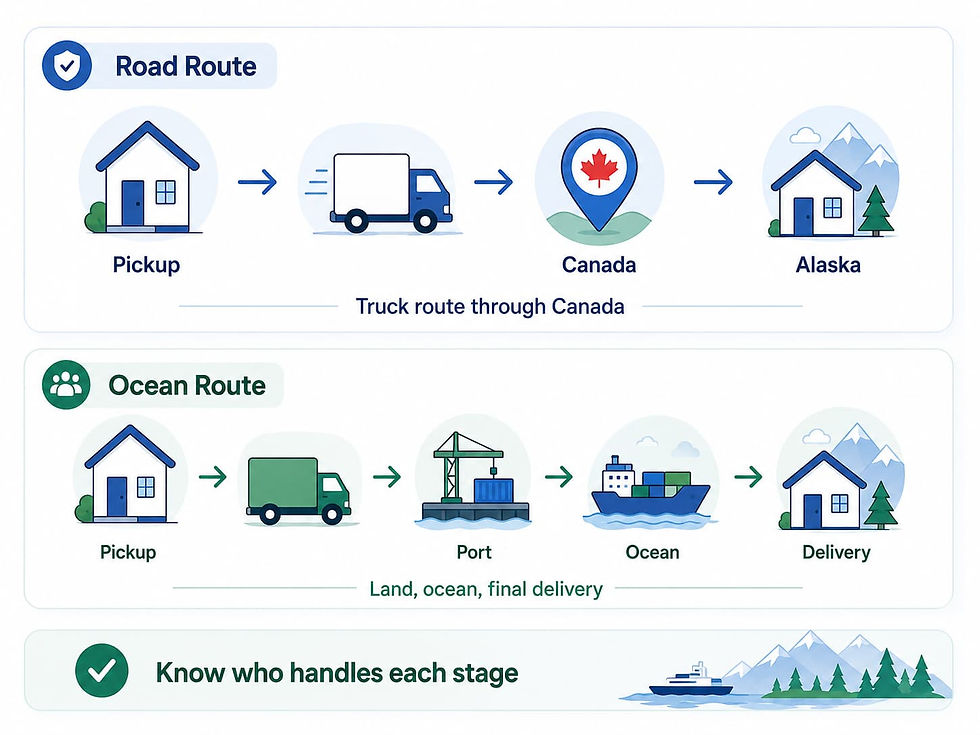
Moving to or from Alaska can involve several stages, including truck transportation, travel through Canada, port handling, ocean shipping, temporary storage, and final-mile delivery.
The right transportation method depends on your destination, shipment size, timing, and access requirements. Our guide to [moving to Alaska by road vs shipping by sea] explains how the two routes differ.
Because the route may involve multiple service providers, it is important to have one clearly identified carrier responsible under the contract.
You Know Who You Are Hiring
The carrier’s legal name should appear on the estimate, order for service, and bill of lading.
You should not have to wait until moving day to learn which company will arrive at your home.
The Carrier Can Be Verified Before Booking
You can check the company through FMCSA and review its:
legal company name;
USDOT number;
MC number;
operating authority status;
authority to transport household goods.
The name in the FMCSA database should match the company named in your moving documents.
The Route Is Explained in Advance
A professional carrier should explain:
whether the shipment will travel through Canada or by ocean;
whether the belongings will be transferred between vehicles or containers;
who will handle final delivery;
the estimated delivery window;
whether storage-in-transit is available.
For an Alaska move, this information is more useful than a promise of an exact delivery date.
When a Moving Broker May Be a Reasonable Option
A broker may be useful if you want help comparing available carriers or are having difficulty finding a company for a specific route.
However, the broker should:
clearly state that it is a broker rather than a carrier;
provide the name and FMCSA information of the actual carrier;
confirm that the carrier has accepted the move;
explain who is responsible for delivery and claims.
Do not choose a broker only because it offers the lowest initial price. Confirm that the carrier’s estimate matches the amount quoted by the broker.
What to Verify Before Booking
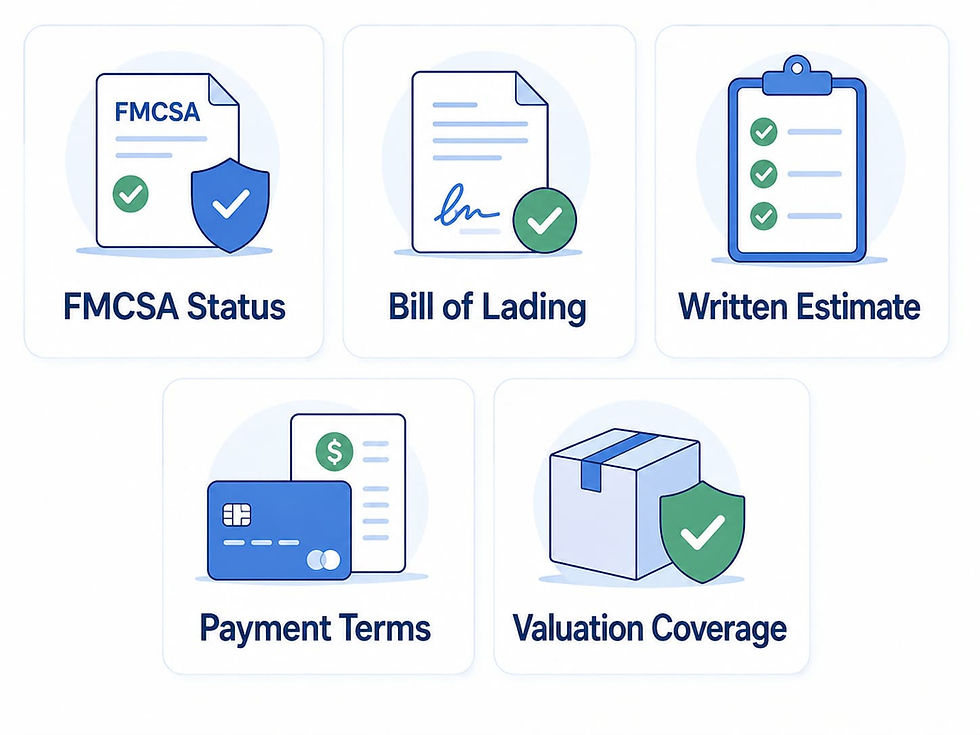
Verify the Carrier and Moving Documents
Ask the company:
Which company will be listed as the carrier on my bill of lading?
Also confirm who will handle:
pickup;
the over-the-road portion;
ocean transportation;
delivery at the final address.
Even a direct carrier may use service partners for part of the route. The important point is that those arrangements should be explained before you sign.
Understand the Type of Estimate
A binding estimate fixes the price for the belongings and services listed in the written estimate.
The price may change if you add items, request additional services, or fail to disclose access conditions such as stairs, elevators, or a long carry.
A non-binding estimate is a preliminary calculation. The final cost may depend on the actual shipment weight and the services provided.
The 110% rule generally limits how much a carrier can require at delivery for services included in a non-binding estimate. It does not always limit the final total bill.
Review the Payment Terms
Before booking, confirm:
the deposit amount;
whether the deposit is refundable;
when the remaining balance is due;
which payment methods are accepted;
whether additional charges may apply.
Do not assume that credit card payment will be accepted at delivery unless it is clearly listed in the contract.
Choose Your Valuation Coverage
Full Value Protection and Released Value are carrier liability options, not traditional insurance policies.
With Released Value, the carrier’s liability is generally limited to $0.60 per pound per item.
For example, if a television weighs 50 pounds, the maximum compensation may be only $30.
You can learn more in our guide to [moving valuation and coverage options].
Red Flags to Watch For
Be cautious if a company:
will not clearly say whether it is a broker or carrier;
refuses to identify the actual carrier;
provides a price without reviewing a detailed inventory;
requires a large nonrefundable deposit;
asks you to sign blank or incomplete documents;
cannot explain who is responsible for each stage of the route.
The Bottom Line
For most Alaska moves, booking directly with a registered carrier is the clearer and more predictable choice. You know which company is responsible under the contract and who is coordinating the shipment.
A broker may still be a reasonable option if it identifies the actual carrier and explains all important terms before you sign.
Do not choose a company based only on the lowest initial price. Choose the option that makes it clear who is responsible for your belongings throughout the move.
Plan Your Alaska Move With a Direct Carrier
Book directly with EZ MoveIt for a clear route, written pricing, an estimated delivery window, and coordinated land and ocean transportation.